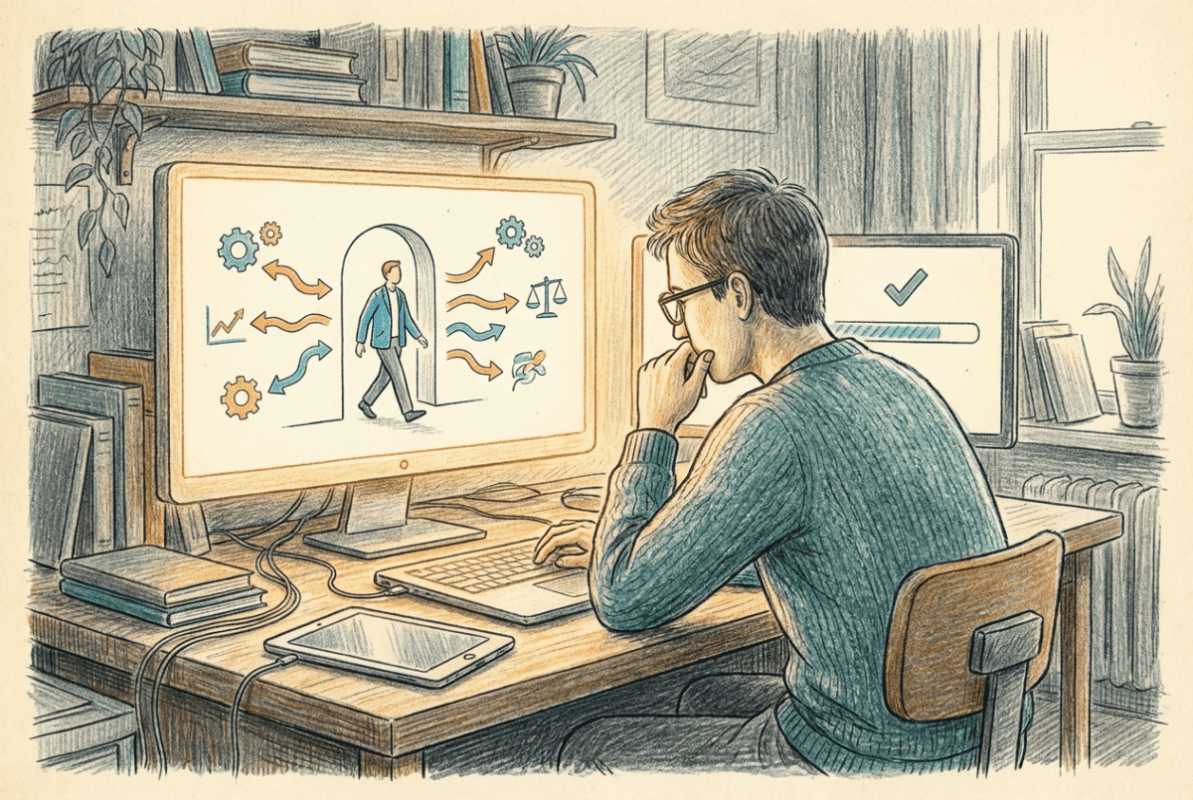

The move to cloud management didn’t just change where policy lives. It changed what trust means and how it’s established.
In a traditional model, trust is largely implied. A device is joined to the domain. It sits on the corporate network. It can reach a domain controller. Those signals together are usually enough to treat it as trusted – and for most of the history of enterprise IT, that assumption held up reasonably well. Devices rarely left the building. Applications lived inside the same boundary. Network location was a meaningful proxy for safety.
That boundary no longer defines reality. Users authenticate from anywhere. Devices move between networks constantly. Applications live on the internet. A device being “on the network” tells you almost nothing about whether it should be trusted right now.
The identity-first model replaces static trust with evaluated trust. Trust is not permanent. It is conditional.
A user signs in. The device reports its state. Conditions are checked. Access is granted based on what is true at that moment. A device that was trusted yesterday can lose access today without anyone touching it – not because something broke, but because something changed. That is the point.
Intune contributes to this by defining what acceptable device state looks like. Encryption enabled. Security controls active. Supported operating system. These aren’t background assumptions baked into the infrastructure. They are measurable conditions that are checked continuously.
That shift has a practical consequence worth naming. In a static model, a device can drift out of alignment and remain trusted because nothing re-evaluates it. It misses patches, accumulates configuration debt, and sits inside the perimeter with full access because it joined once and was never questioned again. In a conditional model, drift becomes visible. Posture is rechecked. Access can respond to change.
This doesn’t eliminate risk. It changes how risk is managed. Security becomes less about being inside a defined boundary and more about continuously satisfying defined requirements. Devices aren’t trusted because they joined once. They’re trusted because they keep meeting policy.
Configuration discipline matters more in a cloud environment than it ever did under a purely network-based model – because now the configuration is the trust signal.
This is why the order of this series matters. Understanding the trust model before moving into enrollment, provisioning, and Conditional Access isn’t background reading. It’s the reason those phases are designed the way they are. Each one builds on the same foundation: trust is earned continuously, not granted once.
Intune Deployment Guide · Phase 1: Foundations
‹ Previous: [1.2] Understanding What Intune Actually Is
Next: [1.3.1] Zero Trust in Practice ›